
How to Use Mindful Movement to Decrease Stress
Feeling overwhelmed by daily life? You’re not alone. Stress can sneak up on anyone, affecting both body and mind. Mindful practices offer a strong solution, helping you take back control and find peace.
Adding stress relief exercises to your day can help you decrease stress and boost your well-being. This article will show you the benefits of mindfulness exercise and give you easy tips to start.
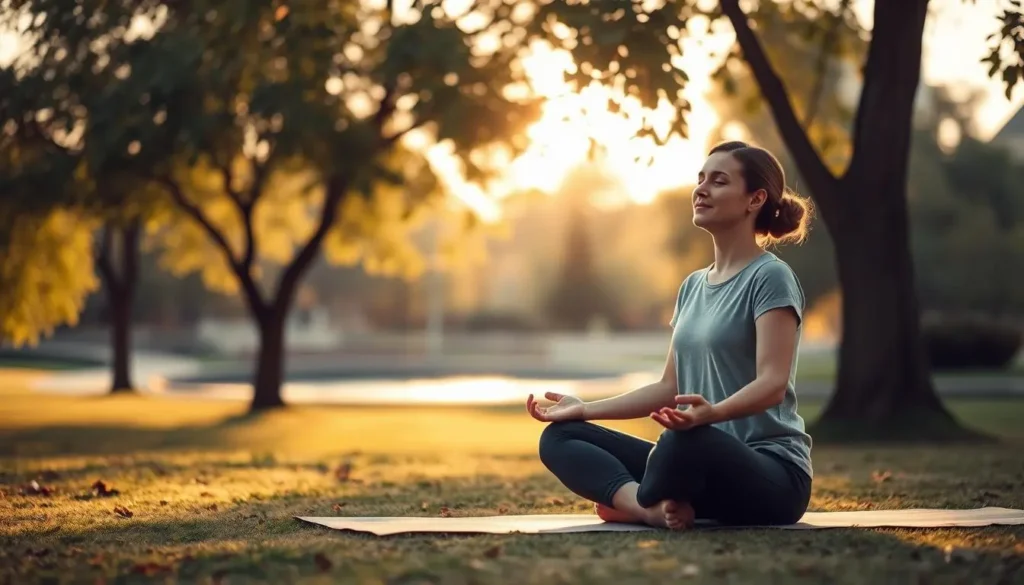
Exploring mindful practices can change your day for the better. You’ll see how simple movements can keep you focused and calm. Let’s look at how these techniques can improve your mental and physical health.
Understanding the Mind-Body Connection in Stress Reduction
Your mind and body are closely linked in how you handle stress. Mindful movement helps tap into this connection. It reduces stress and boosts your well-being.
The Science Behind Movement and Stress Hormones
Mindful movement affects your stress hormones, like cortisol. Regular practice can lower cortisol levels. This helps your body relax and manage stress better.
How Your Nervous System Responds to Mindful Activities
Mindful activities change your nervous system. It moves from a stressed state to a relaxed one. This calm is key to reducing stress.
The Psychological Benefits of Body Awareness
Body awareness improves your mental health. It helps you see yourself positively and lowers anxiety. Being aware of your body helps manage stress and improve your mental state.
| Practice | Effect on Stress Hormones | Nervous System Response | Psychological Benefit |
|---|---|---|---|
| Mindful Movement | Decreases cortisol levels | Promotes parasympathetic state | Enhances body awareness and reduces anxiety |
Understanding the mind-body connection and using mindful movement can reduce stress. It improves your life’s quality.
What Is Mindful Movement and Its Benefits for Stress Relief
Mindful movement combines body awareness, breathing, and movement. It helps you connect your mind and body. This leads to better overall health.
Defining the Concept of Mindfulness in Motion
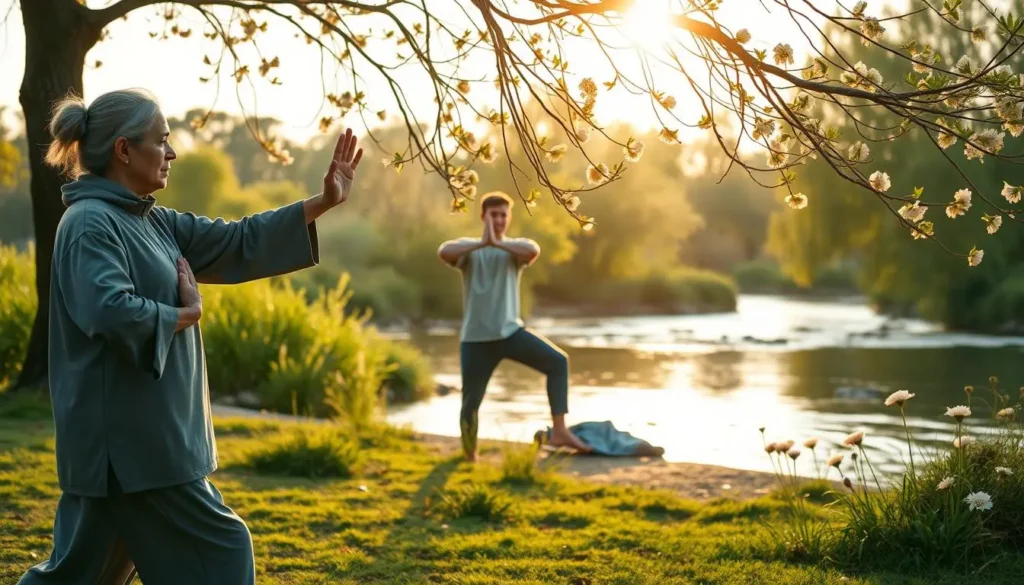
Mindfulness in motion means being fully present in physical activities. It’s about noticing your body, breath, and surroundings. This balance helps you stay calm and focused.
Short-term vs. Long-term Stress Management Benefits
Mindful movement has both quick and lasting effects. It can calm you down right away. Regular practice also boosts emotional control, resilience, and well-being over time.
| Benefits | Short-term | Long-term |
|---|---|---|
| Reduced Anxiety | Yes | Yes |
| Improved Emotional Regulation | No | Yes |
| Enhanced Resilience | No | Yes |
How Mindful Movement Differs from Regular Exercise
Mindful movement is different from regular exercise. It combines physical activity with mental focus and breathing. This makes exercise a meditative experience, improving health and stress relief.
By understanding and practicing mindful movement, you can unlock its full potential for stress relief and overall well-being.
Preparing Your Mind and Environment for Practice
Before starting your mindful movement, prepare your mind and space. This setup ensures a great mindfulness experience. It helps you relax and focus better.
Creating a Distraction-Free Space
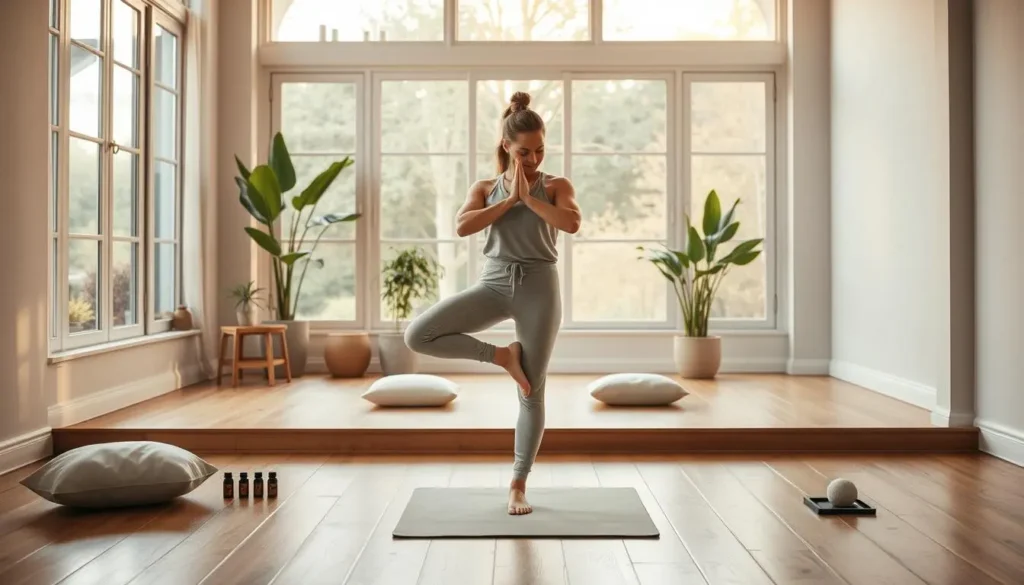
Find a quiet, comfy spot for your practice. Clear the area of clutter or distractions that might interrupt you. Use a room or corner that feels calm.
Setting Clear Intentions Before Beginning
Define your goals before starting. What do you want to achieve? Setting clear intentions guides your practice and gives you direction.
Essential Props and Comfortable Clothing
Wear clothes that let you move freely. Use mats, blocks, or blankets for support. Choose items that make you feel relaxed and help you focus.
Addressing Common Barriers to Getting Started
Starting might be tough, like finding time or dealing with physical issues. Be patient and flexible. Remember, the goal is to find calm and awareness. Overcoming these barriers leads to a lasting practice that brings peace.
Foundational Breathing Techniques for Mindful Movement
To fully embrace mindful movement, it’s key to know the basic breathing techniques. Breathing is crucial for relaxation, focus, and fully engaging in physical activities.
Diaphragmatic Breathing Basics
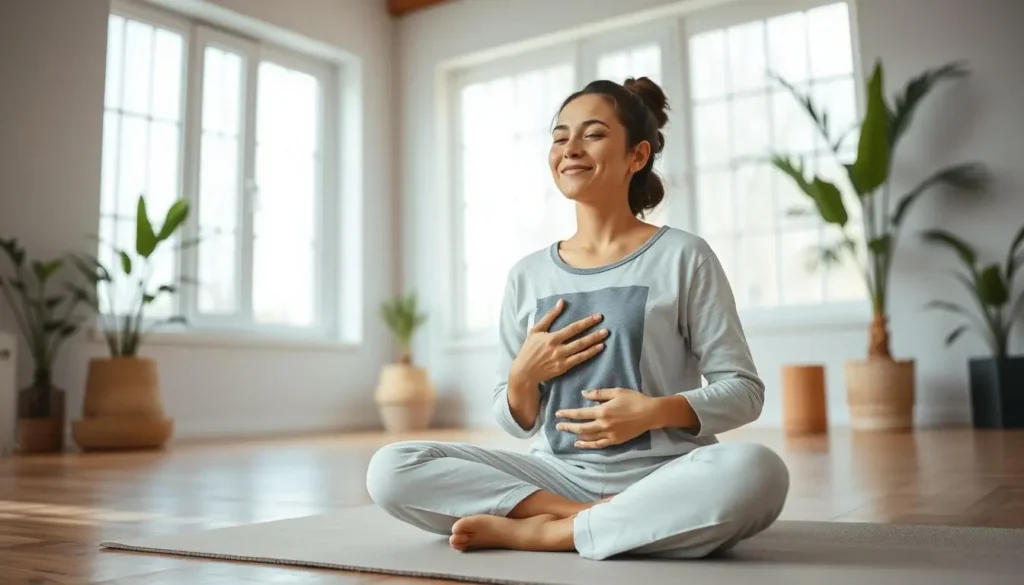
Diaphragmatic breathing, or belly breathing, uses your diaphragm. It’s more efficient and calms your nervous system. To do it, place one hand on your belly and the other on your chest. Inhale deeply through your nose, letting your belly rise while your chest stays still.
Breath-Movement Coordination Methods
Linking your breath with movement boosts mindful movement’s benefits. Synchronize your inhales and exhales with your exercise. For instance, inhale while stretching and exhale while contracting.
Using Intentional Breathing to Calm Your Nervous System
Intentional breathing is a strong tool for calming your nervous system. Focus on your breath to change your body’s stress response to relaxation. 4-7-8 breathing and box breathing are great for stress relief.
4-7-8 Breathing Technique
The 4-7-8 technique involves inhaling for 4 seconds, holding for 7 seconds, and exhaling for 8 seconds. It slows your heart rate and promotes relaxation.
Box Breathing for Stress Relief
Box breathing means breathing in for 4 counts, holding for 4 counts, exhaling for 4 counts, and holding again for 4 counts. It creates a “box” shape with your breath, bringing balance and calmness.
Adding these breathing techniques to your mindful movement practice boosts stress relief and well-being.
Simple Mindful Movement Exercises for Beginners
Mindful movement is for everyone, and starting with simple exercises is a great way to reduce stress. You can add mindful movement to your daily life with easy practices.
Gentle Morning Stretching Sequence
Starting your day with gentle stretches can boost blood flow and flexibility. Start with neck stretches, then do shoulder rolls. Stretch your arms, sides, and back next. This awakens your body and gets you ready for the day.
Mindful Walking Practice for Outdoor Stress Relief
Walking mindfully outside is a great way to reduce stress. Focus on your steps, the ground feeling, and your breath. Take in the sights, sounds, and smells around you. This keeps you in the present moment.
Desk-Based Movements for Workday Stress
If you have a desk job, simple movements can help with stress. Try wrist rotations, chair squats, and seated twists at your desk. These actions ease physical tension and boost focus.
Body Scan While Moving: A Step-by-Step Guide
A body scan while moving means focusing on your body as you move. Start with your breath, then your toes, feet, ankles, and up to your head. This practice improves body awareness and releases tension.
Adding these stress relief exercises to your daily routine can lower stress and boost well-being. Remember, the key to mindful movement is to be consistent and patient.
Yoga-Based Mindful Movement Techniques
Mindful movement techniques, especially those from yoga, are great for managing stress. Adding yoga to your daily life can lower stress and boost your well-being.
Stress-Reducing Yoga Poses and Sequences
Some yoga poses are especially good for easing stress. Child’s Pose (Balasana), Downward-Facing Dog (Adho Mukha Svanasana), and Legs Up the Wall Pose (Viparita Karani) are great examples. These poses can calm your nervous system and ease muscle tension.
Creating a 10-Minute Calming Flow
A short yoga sequence is perfect for starting or ending your day. Start with gentle stretches, then move to restorative poses, and end with deep breathing. This flow tells your body it’s time to relax.
Restorative Poses for Deep Relaxation
Restorative yoga uses props to support your body in relaxing poses. This lets your muscles fully release tension. Use bolsters or pillows to support your back or legs while relaxing.
Modifications for Different Ability Levels
Yoga can be adjusted for anyone, no matter your fitness or flexibility level. If a pose is hard, you can modify it or use props for help. This makes yoga available to everyone, regardless of age or ability.
| Pose | Modification | Benefit |
|---|---|---|
| Tree Pose (Vrksasana) | Stand on both feet or use a wall for support | Improves balance and focus |
| Warrior II (Virabhadrasana II) | Shorten your stance or bend your back knee | Strengthens legs and hips |
| Seated Forward Fold (Paschimottanasana) | Bend your knees or use a strap | Stretches hamstrings and back |
By adding these yoga-based mindful movement techniques to your daily routine, you can lower stress and improve your overall well-being.
Eastern Traditions: Tai Chi and Qigong for Stress Management
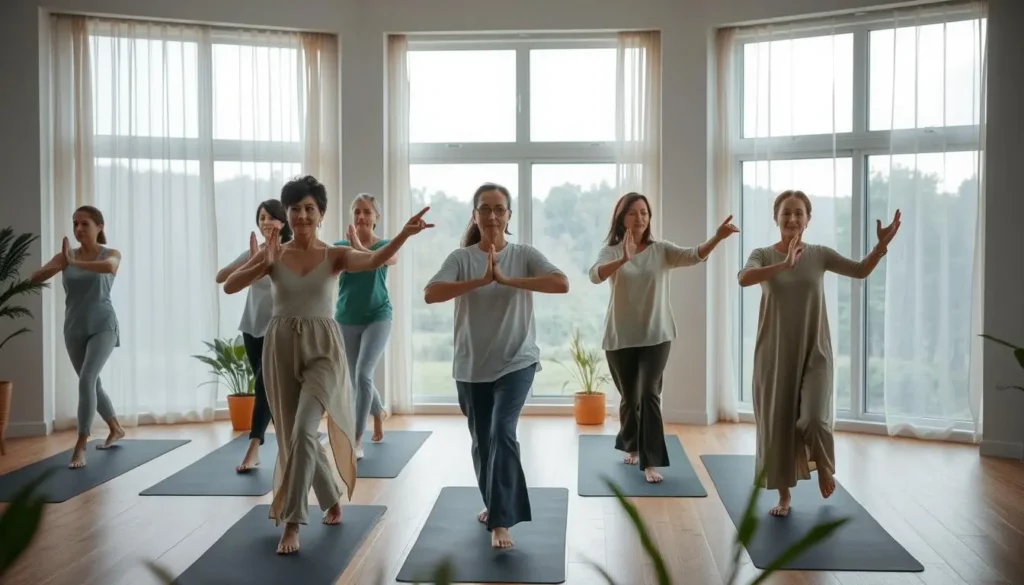
Tai Chi and Qigong come from Eastern traditions. They are great for lowering stress. These practices mix mindful movement with deep breathing to help you relax and find balance.
Basic Tai Chi Movements for Beginners
Tai Chi is all about slow, flowing movements. It helps improve balance, flexibility, and inner peace. Beginners can start with simple moves like “Grasping the Sparrow’s Tail” or “Single Whip.” These moves calm the mind and boost physical coordination.
Qigong Exercises to Balance Energy
Qigong is about working with the body’s energy, or “qi.” It includes standing or sitting postures with deep breathing. For example, “Embracing the Tree” or “Parting the Clouds” exercises. These help lower stress and improve well-being.
The Meditative Aspects of These Ancient Practices
Tai Chi and Qigong are forms of movement meditation and mindfulness in motion. By focusing on the movements and breath, you can enter a meditative state. This state reduces stress and clears your mind.
Incorporating These Movements into Daily Routines
You can add Tai Chi and Qigong to your daily life, even if you’re busy. Just a few minutes a day can help a lot. Try doing it in the morning to start the day right or in the evening to relax.
By taking up these Eastern traditions, you can lead a more balanced and peaceful life. This is all thanks to the practice of mindful movement.
Expressive Mindful Movement Practices
Exploring mindful movement can help manage stress and improve your mood. It lets you connect with your body deeply, leading to awareness and calm.
Free-Form Movement Expression and Dance
Free-form movement and dance are great for expressing yourself. By not following strict steps, you can move naturally. This lets your body respond to your feelings and the music.
Benefits of Free-Form Movement:
- Enhances creativity
- Reduces stress and anxiety
- Improves body awareness
Structured Movement Meditation Techniques
Structured movement meditation blends mindfulness with physical movement. Practices like tai chi or qigong offer a meditative experience. They use slow, deliberate movements.
Using Music to Enhance Body Awareness
Music can greatly improve your mindful movement. Choosing music that resonates with you makes the experience more immersive. It helps you connect with your body more deeply.
Journaling About Your Movement Experience
Journaling after your practice can help you reflect. It’s a space to note your progress and insights. It helps you process your experiences and emotions.
Here’s a simple table to track your progress:
| Date | Movement Practice | Emotional State |
|---|---|---|
| Monday | Free-form dance | Relaxed |
| Wednesday | Structured meditation | Focused |
Adding these mindful movement practices to your routine can bring many benefits. It can improve your overall well-being.
Creating a Sustainable Mindful Movement Routine
Creating a sustainable routine is key to experiencing the long-term benefits of mindful movement. By incorporating mindful movement into your daily life, you can effectively decrease stress and improve overall well-being.
Designing Your Personal Practice Calendar
To start, design a personal practice calendar that fits your lifestyle. Consider your schedule, preferences, and goals when planning your mindful movement practice.
- Identify the best times of day for your practice
- Set realistic goals for frequency and duration
- Include a variety of mindfulness exercises to keep the practice engaging
Scheduling for Consistency and Success
Consistency is crucial for making mindful movement a habit. Schedule your practice in your calendar and treat it as a non-negotiable appointment.
| Day | Activity | Duration |
|---|---|---|
| Monday | Mindful Walking | 30 minutes |
| Wednesday | Yoga | 45 minutes |
| Friday | Body Scan Meditation | 20 minutes |
Tracking Progress and Managing Expectations
Tracking your progress can help motivate you to continue. Keep a journal or use an app to monitor your practice and note how it makes you feel.
Overcoming Common Obstacles to Regular Practice
Be prepared to face challenges such as lack of time or motivation. Finding a practice buddy or joining a class can help you stay on track.
By following these steps and staying committed, you can make mindful movement a sustainable part of your routine. This leads to lasting stress relief and improved overall health.
Bringing Mindful Movement into Your Everyday Life
Adding mindfulness in motion to your daily routine boosts your well-being. You can use mindful movement techniques in simple tasks like walking or doing chores. Just focus on how your body feels and moves.
Practicing conscious movement makes you more aware of your body. This awareness helps you take better care of it. You might notice better posture, less muscle tension, and better health.
To make mindful movement a regular part of your life, start small. Spend a few minutes each day on a body awareness practice. This could be deep breathing or a quick stretch. As you get more comfortable, you can do it for longer and more often.
Using mindful movement techniques in your daily life can lower stress and improve your mood. With regular practice, you’ll better understand your body’s needs. This helps you handle life’s ups and downs more easily.